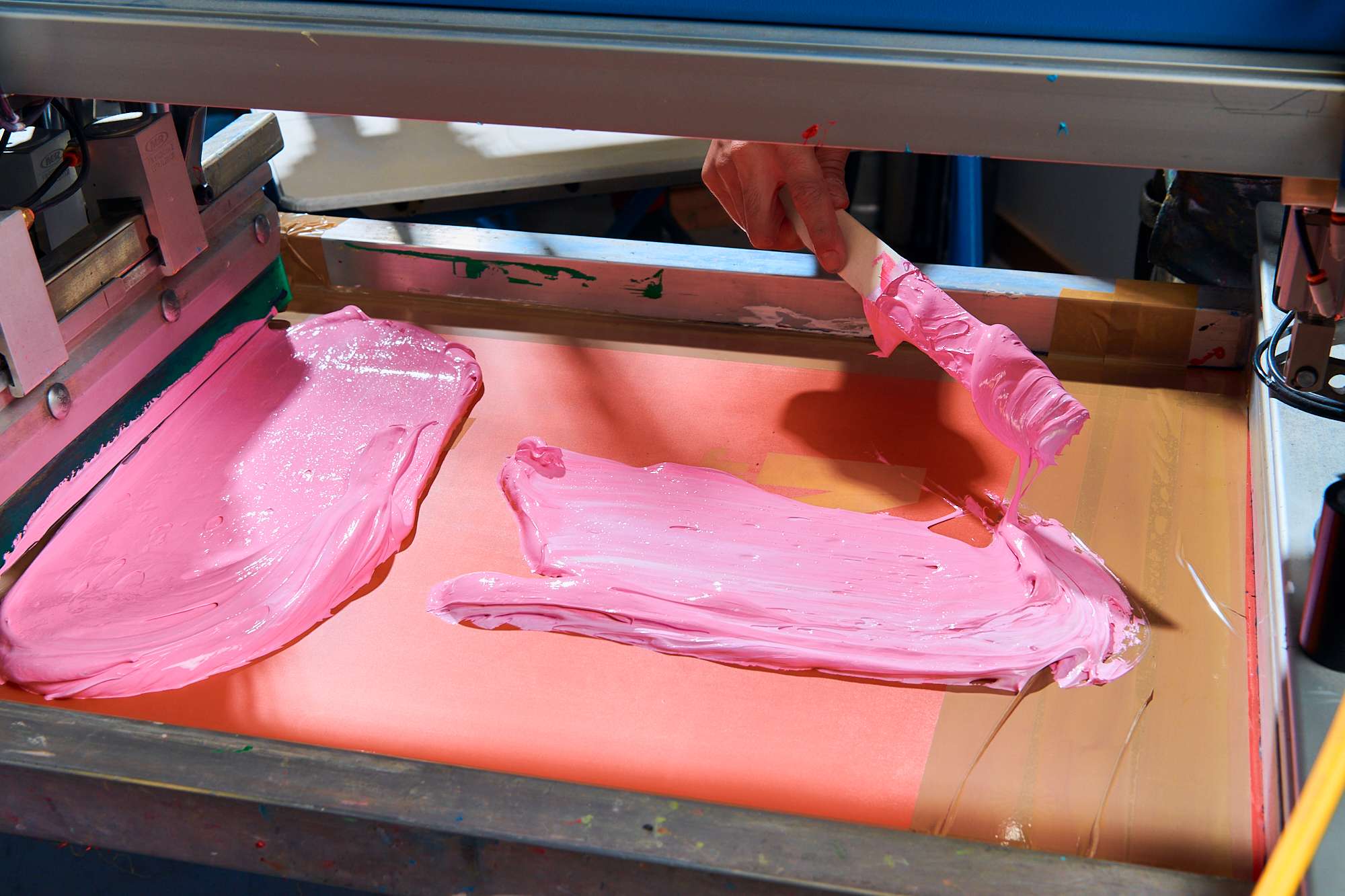
When selecting a method for custom apparel printing, it is essential to understand the differences between Screen Printing and Direct to Garment (DTG). Both methods have unique advantages and are suitable for different project needs.
Screen Printing: The Classic Choice
Screen Printing is a well-established method known for its vibrant colors, especially on dark fabrics. It is particularly effective for designs with solid graphics and limited colors. The process involves pushing ink through a stencil onto the fabric, making it ideal for large batches due to the economies of scale. On the other hand, the more colors your design has, the more effort is needed to produce the final product.
Pros about Screen Printing
- Produces beautifully saturated colors and a distinctive appearance.
- More economical for larger orders since a lot of the production time is put into the setup. Meaning, when you order more, that setup is spread out among more products resulting in less cost.
- Extremely durable decoration with prints often outlasting the garment itself.
- Allows for Pantone® color matching since each ink color is mixed to match your design.
Cons about Screen Printing
- Not cost-effective for small orders due to setup time and costs.
- Limited ability to reproduce full-color photographs.
- Designs with multiple colors require more screens, increasing the complexity and cost.
Read more about the reason behind screen printing minimums: Why do screen printing and embroidery require minimums?
Direct to Garment (DTG): The Digital Approach
DTG printing, similar to using an inkjet printer for apparel, sprays ink directly onto the garment, creating detailed and photorealistic images. This method is great for intricate designs, as it offers a lot of color options and can print detailed images with almost no color limitations. DTG is particularly suitable for small batches or individual items, as it has minimal setup time and allows for on-demand printing.
Pros about DTG
- Excels in printing detailed and complex designs, including photorealistic images that fall in the CMYK spectrum.
- More flexible for small orders or print-on-demand business models.
- Offers quick turnaround time for printing and delivery.
Cons about DTG
- Can be slower and more costly for larger orders.
- Works best on fabrics with at least 50% cotton.
- Inks are more delicate and do not penetrate the fabric as deeply, which can affect durability.
- Can sometimes struggle with printing white ink, or colors, on dark fabrics.
Conclusion
Choosing between Screen Printing and DTG depends on several factors such as your order size, design complexity, fabric type, and the overall look and feel you desire. Screen Printing is ideal for larger orders that require vibrancy and durability. DTG suits smaller orders and intricate, multi-color designs, offering flexibility and detailed print quality.
About us
At Rendered.co, we take pride in our expertise in water based screen printing. We specialize in delivering high-quality, vibrant prints for various applications. Although we do not offer DTG (direct-to-garment) printing, we are committed to guiding our customers towards the best solution for their unique needs, even if it involves exploring alternative methods.


