
The right decoration method for custom hats depends on the details in your design, your budget, and how you want the finished hat to look. Embroidery is a good choice for most hat projects, and it's what many customers ask for first. Patches and screen printing often work better for designs with small text, fine lines, or large areas of solid color.
When embroidery is the right choice
With embroidery, we stitch your design in thread directly into the front of the hat, which gives it a raised, textured look. It suits simple logos with bold shapes and a limited number of colors.
The custom embroidered hats we made for Papere Bread in Houston are a good example. The hand drawn lettering filled with striking yellow and blue translated beautifully into stitching.
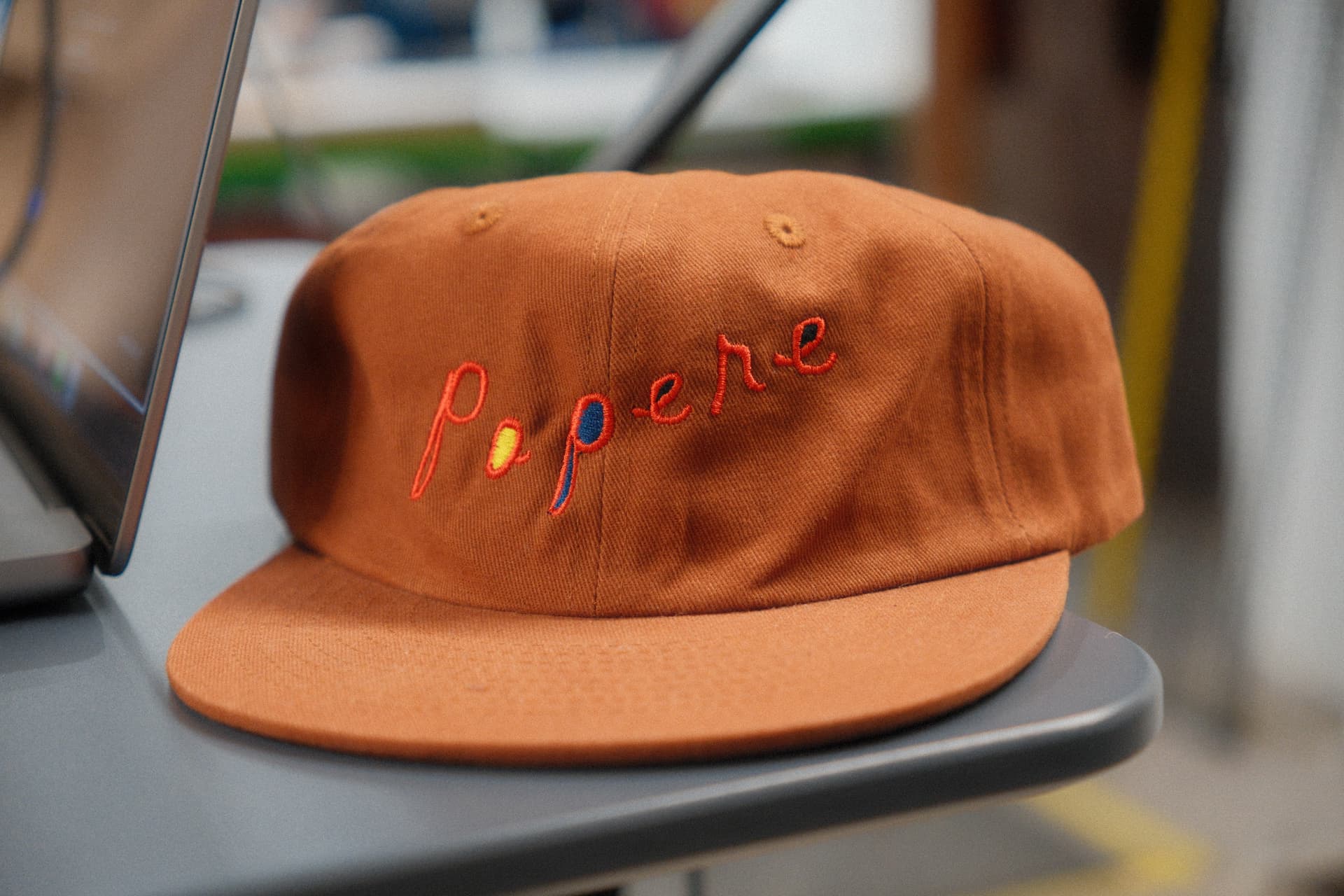
Before we embroider anything, a digitizing artist converts your artwork into a stitch file, a set of instructions for where each stitch goes, its angle, and how closely the stitches are spaced. We work only with artists we've vetted for this step, because the file's quality determines how clean the finished embroidery looks.
After stitching, we trim loose threads and clean up the back of the embroidery. That side is visible inside the hat every time someone takes it off, so we finish it as carefully as the front.
Thread has a fixed thickness, so very small letters and thin lines can blur together when embroidered. That's where other hat decoration methods come into play.
When a patch works better than embroidery
A patch is a separate piece of fabric with your design on it, made first and then attached to the hat. Custom patch hats are a good option for designs with large areas of solid color, like a filled background. Covering that much of the hat with direct embroidery takes a high number of stitches, which can make the front of the hat stiff and heavy.
Woven patches also work well for highly detailed designs. They're made on a loom from very fine, tightly spaced threads, so they can reproduce finer lines and smaller text than we can stitch directly onto a hat.
For Baldinger's Razava Bread, we put a woven patch on a blue hat because the fine details around the design's border were too small to embroider directly.
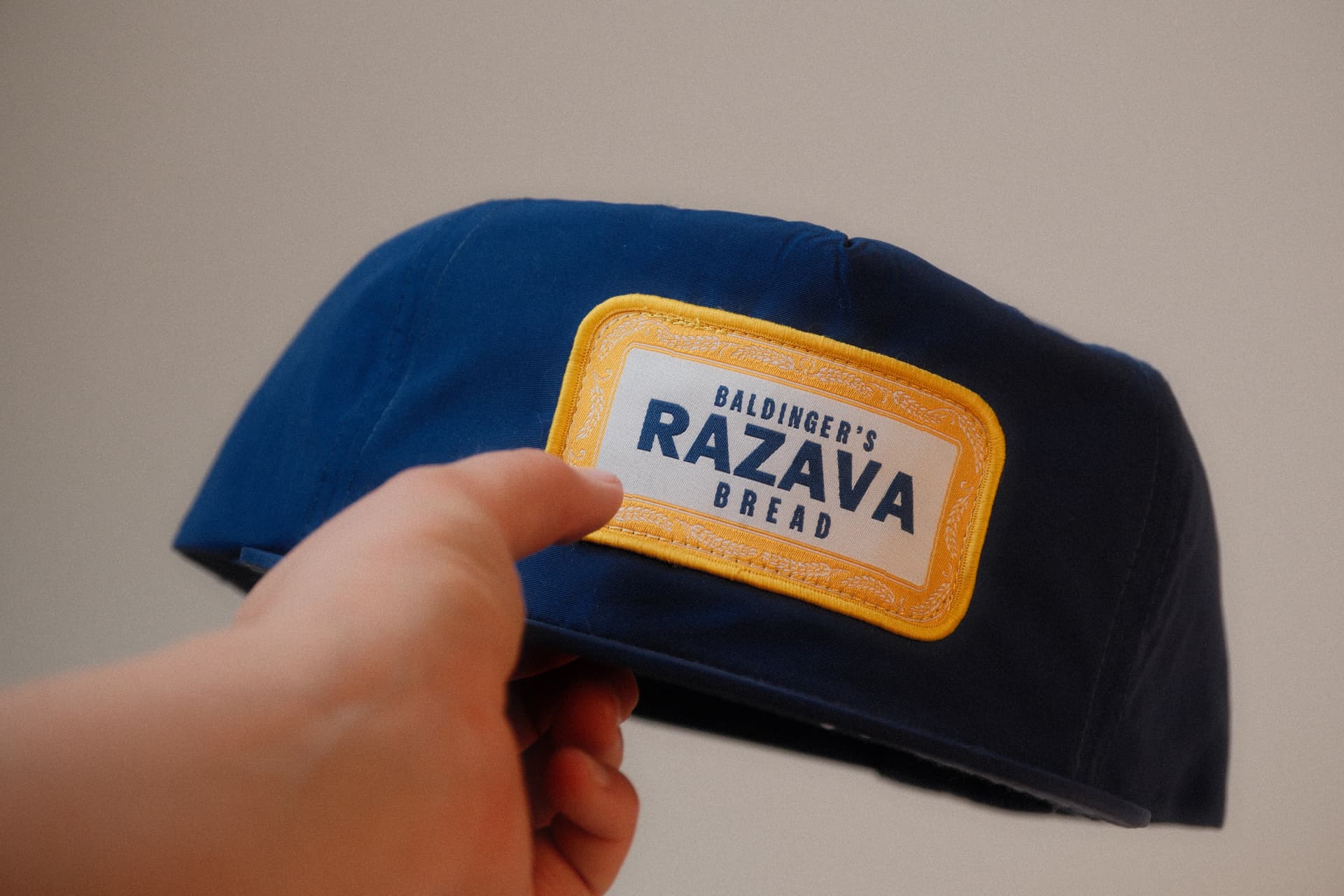
We sew every patch onto the hat instead of attaching it with a heat press and heat-activated adhesive. Sewing takes longer, but the patch is more secure and its edge has a clean, finished look.
When screen printing is the better choice
With screen printing, we push ink through a fine mesh screen, which works like a stencil, to print your design onto the front of the hat. Ink can reproduce smaller text and thinner lines than thread, so screen printed hats are often the best option for designs with a lot of small lettering or fine detail.
Printing can also make sense for a tighter budget, or for customers who prefer a flat, printed look to raised thread.
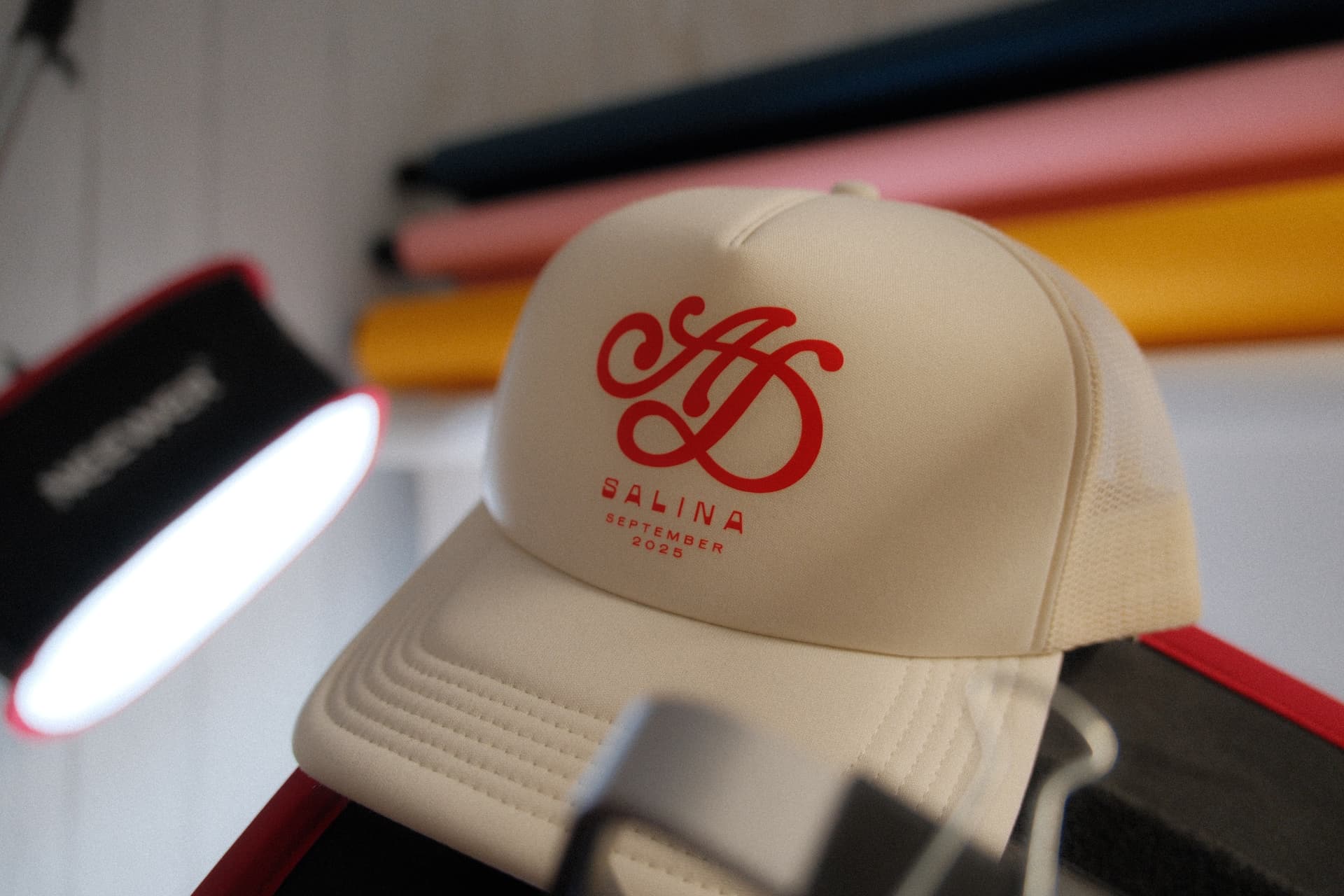
We screen printed an ecru (a light, unbleached off-white) trucker hat with red text as a personal project for John Taylor of Duran Duran.
When we recommend a different method than you asked for
If you ask for embroidery and your design has detail too fine for thread, we'll recommend screen printing instead.
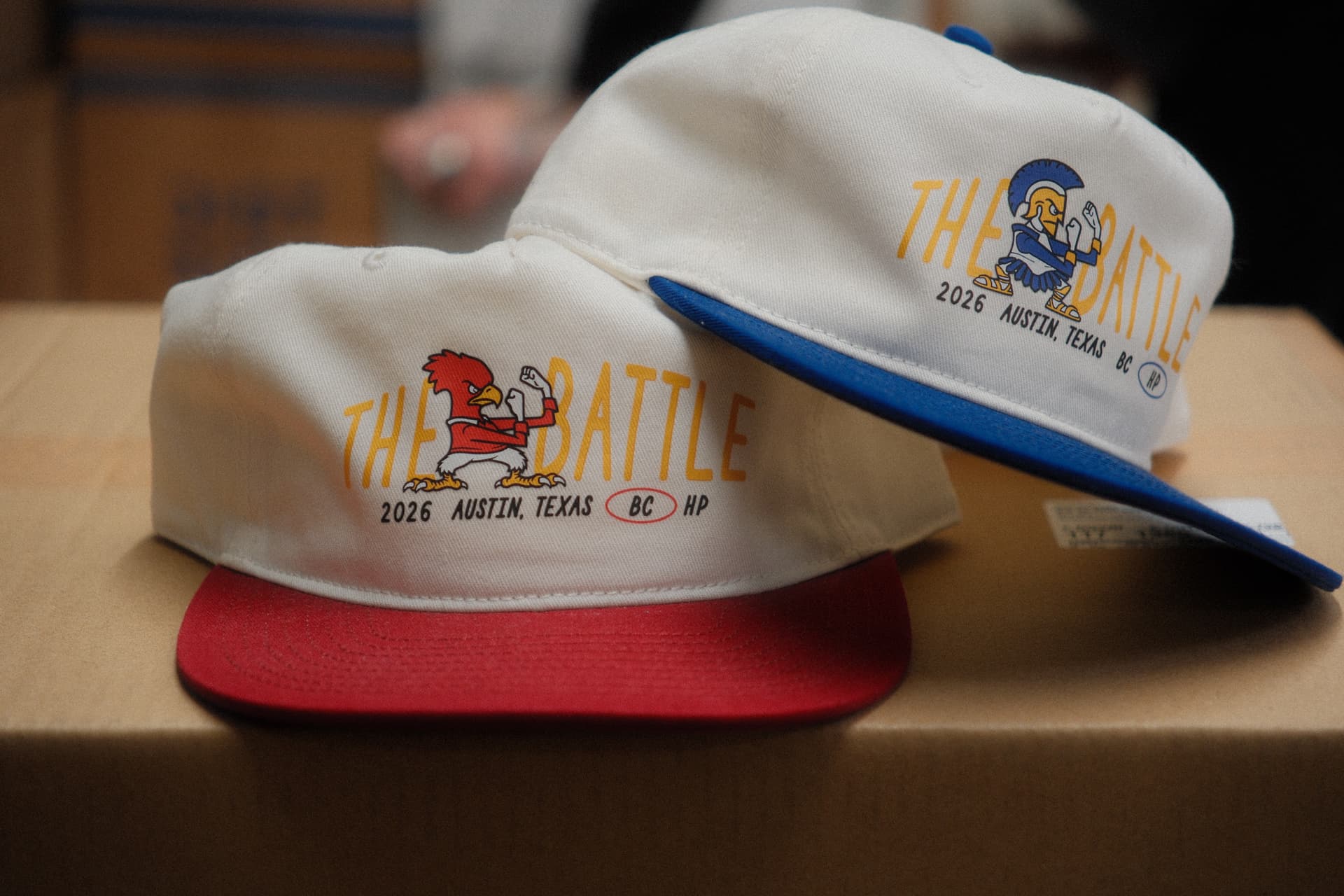
Kelly Nichols originally asked us to embroider these hats. Stitching would have blurred too much of the design, so we recommended printing.
Starting a hat project
Send us your artwork as it is, and we'll recommend a method based on the design, your budget, and the look you want. Vector files like AI, EPS, and SVG are easiest for us to work with because they scale to any size without losing quality. If you're not sure what you have, send the best file you've got and we'll tell you right away whether it will work.
Please skip online file converters, which can change colors or flatten layers in ways that are hard to spot until production. Our guide to preparing art for screen printing explains file types in more detail.
If a finished hat isn't right, we'll go to unreasonable lengths to make it right.


