
What drives your quote, from garment to ink colors, and where the real price breaks happen.
The garment, the number of print locations, the number of ink colors, and the quantity you order set the price on a custom screen printed t-shirt. Print size within a shop's print area typically doesn't change the cost. A small chest logo and a full-front design often cost the same, because the setup work behind them is the same either way.
That surprises most first-time buyers, who may assume ink colors or print size drive the number. In practice, the garment and the print locations are the largest price contributors.
If you're pricing out a merch drop, a client project, or your first bulk order, this guide should help you know what you're paying for before you compare custom t-shirt quotes.
The Garment Costs the Most
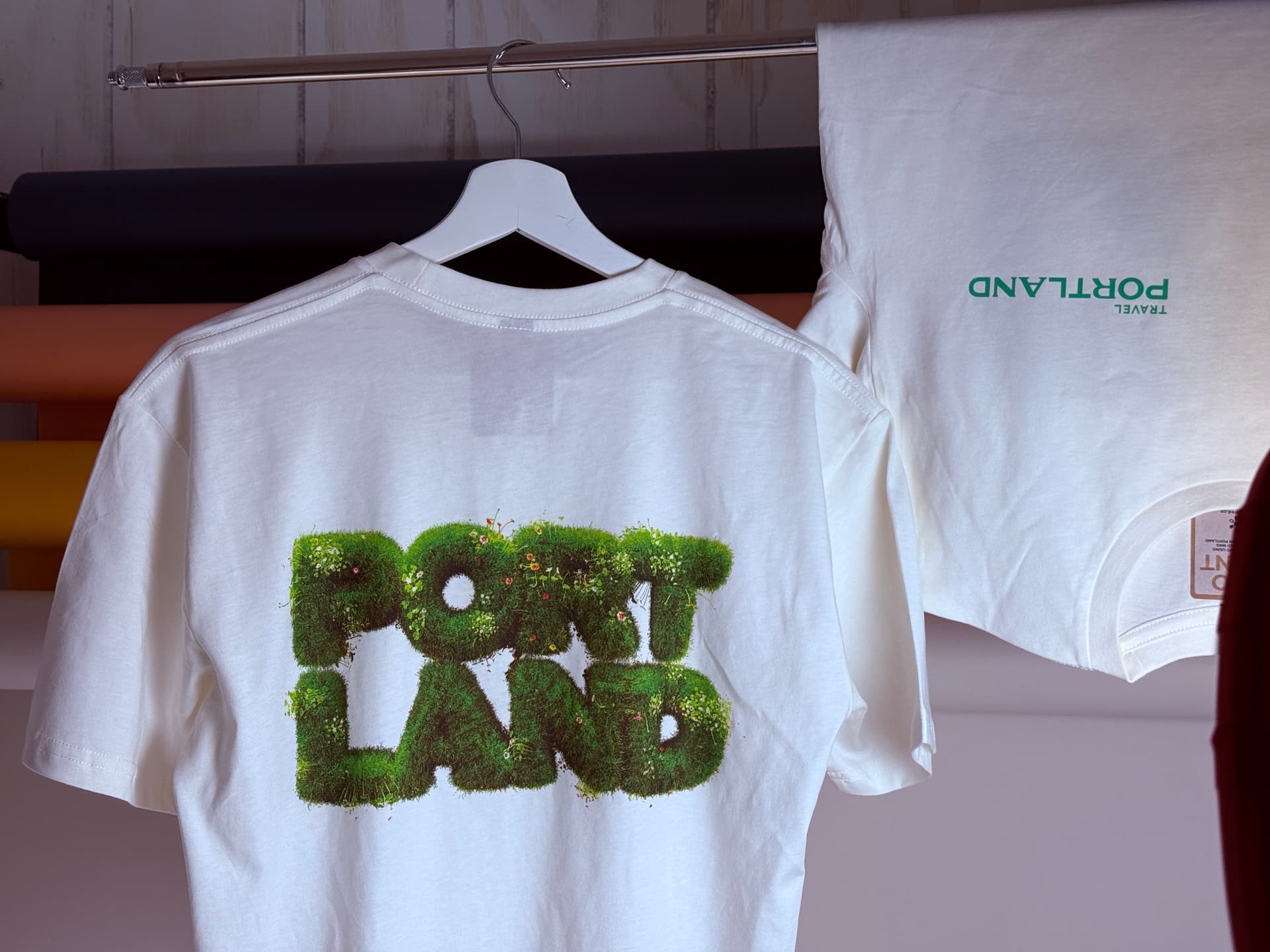
Your garment is the biggest line item on any quote. A basic cotton tee and a premium blank like the AS Colour 5001 Staple Tee are priced differently before printing factors in.
In most cases, you get what you pay for when it comes to t-shirt blanks. The cheapest options usually have trade offs. For example low priced, soft t-shirts are often made of thin materials that wear out quickly while more durable low-cost options feel scratchy and inflexible. You’ll find more balance in feel and durability with higher priced blanks.
Consider what your t-shirt will be used for when comparing blanks. A low-cost, scratchy-but-durable tee brand like Gildan would work great for a large order for a summer camp. A comfortable and stylish AS Colour blank would be perfect for a limited run merch drop from an artist.
Expect a higher quote for different styles like long sleeves, v-necks, polos, cropped, and pocketed t-shirts.
Print Locations Cost More Than Colors
Adding an extra ink color to your design costs about $1 to $2 per shirt. A second location, printing on the back as well as the front or on the sleeves, adds anywhere from about $1.50 to $20 or more per shirt, depending on how many colors are in that second print and how many shirts you're ordering. Simple designs at higher quantities cost less, near the low end of that range; complex, multi-color designs at lower quantities cost more, near the high end. The pricing examples below show how much that range varies.
This is one of the details that catches first-time buyers off guard. An extra color on a design barely changes the price, but an extra location changes it a lot, because each location needs its own screen, its own setup, and its own pass through the press. If you're sketching out a shirt with a front graphic and a back print, budget for that decision early.
Print Size Doesn't Change the Price
Within a shop's print area, a small left-chest logo and a large full-front graphic typically cost the same to print. Each location gets a screen sized to the largest version of your design that area can fit, so printing costs the same whether your artwork fills that area or sits small in the middle of it. If you're between a bold, oversized front graphic and a smaller, more understated mark, you usually will not have to factor your budget into that decision.
Why Setup Costs Shrink at Higher Quantities
Preparing a screen for each color, mixing ink to match your colors, and aligning each screen so every color prints in exactly the right spot all happen before the first shirt comes off the press. That setup work costs the same whether you're printing 20 shirts or 1200. When you order the minimum the fixed setup cost divides across very few shirts, which raises the per-shirt price; order more and the same setup cost divides across more shirts, which lowers it.
The first big price break often starts around 50 pieces. The next noticeable drop is around 150 pieces, where the setup time spreads thin enough to lower the per-shirt cost again. It's worth asking your printer what the price looks like at each quantity before you commit to a number.
A Real Pricing Example
We pulled two real quotes from Rendered for a Black AS Colour 5001 Staple Tee, printed front only, at four different order quantities. The dollar amounts are specific to Rendered, but the pricing pattern is typical of screen printing generally.
The first is a single spot color print, one color, one screen. The second is an 8-color halftone photo design, which builds a photo-realistic image out of tiny dots of ink, similar to how a printed photograph in a magazine is built from small dots rather than one solid color.
Single color spot print, front only A 25-shirt order runs $20.00 per shirt. At 50 shirts, the price drops to $15.70. At 100 shirts, it's $13.95. At 1,000 shirts, it's $12.40.
Adding a matching back print adds $1.50 to $6.50 per shirt, depending on quantity. At 1,000 shirts, that back print barely changes the price. At 25 shirts, it adds more, since the setup for that second screen spreads across far fewer pieces.
8-color halftone photo print, front only A 25-shirt order runs $34.00 per shirt. At 50 shirts, the price drops to $24.45. At 100 shirts, it's $20.95. At 1,000 shirts, it's $16.25.
Adding a matching back print here adds $5.40 to $20.25 per shirt. The logic is the same, but the range is larger, because an 8-color back print requires eight times the screens and setup of a single-color one.
Both quotes use the same garment, the same print location, and the same quantity curve. The variables that change are color count and order size, and quantity makes the biggest difference in price.
Why Quotes for the Same Shirt Can Vary So Much
The garment, the ink, and the fee structure are the three places quotes typically differ.
Garment weight is a trade-off. Lighter blanks cost less and feel lighter against the skin. Heavier blanks cost more and wear more slowly. Ink involves a similar trade-off: plastisol can be printed faster and costs less to produce, while water-based ink takes more effort to run consistently but produces finer detail and a softer feel on the finished print. We specialize around heavier blanks and water-based ink because that's the result we aim for, and every ink we mix is Pantone matched from the start, checked against a standardized color reference so your brand colors match this order and your next reorder.
Fee structure varies too. Some shops list Pantone color matching, screen setup, and film output as separate charges on top of the per-shirt price. We include those costs in the quoted amount. Neither approach is wrong, but it changes what the sticker price tells you. A shirt quoted at $18 with $60 in setup fees added on may cost more than a shirt quoted at $21 with nothing added. It's worth asking what's included before comparing two numbers side by side.
What to Look For
When you're comparing quotes, evaluate the garment brand and style number, the ink type, and a full list of any fees outside the per-shirt price. Those three items tell you the most about what you're paying for.
Custom apparel pricing becomes more clear once you know what's being counted. The garment is the biggest cost, print locations cost more than colors, and quantity determines the final price per shirt. If you want to see what a real quote looks like for your design, use our designer tool or get in touch!


