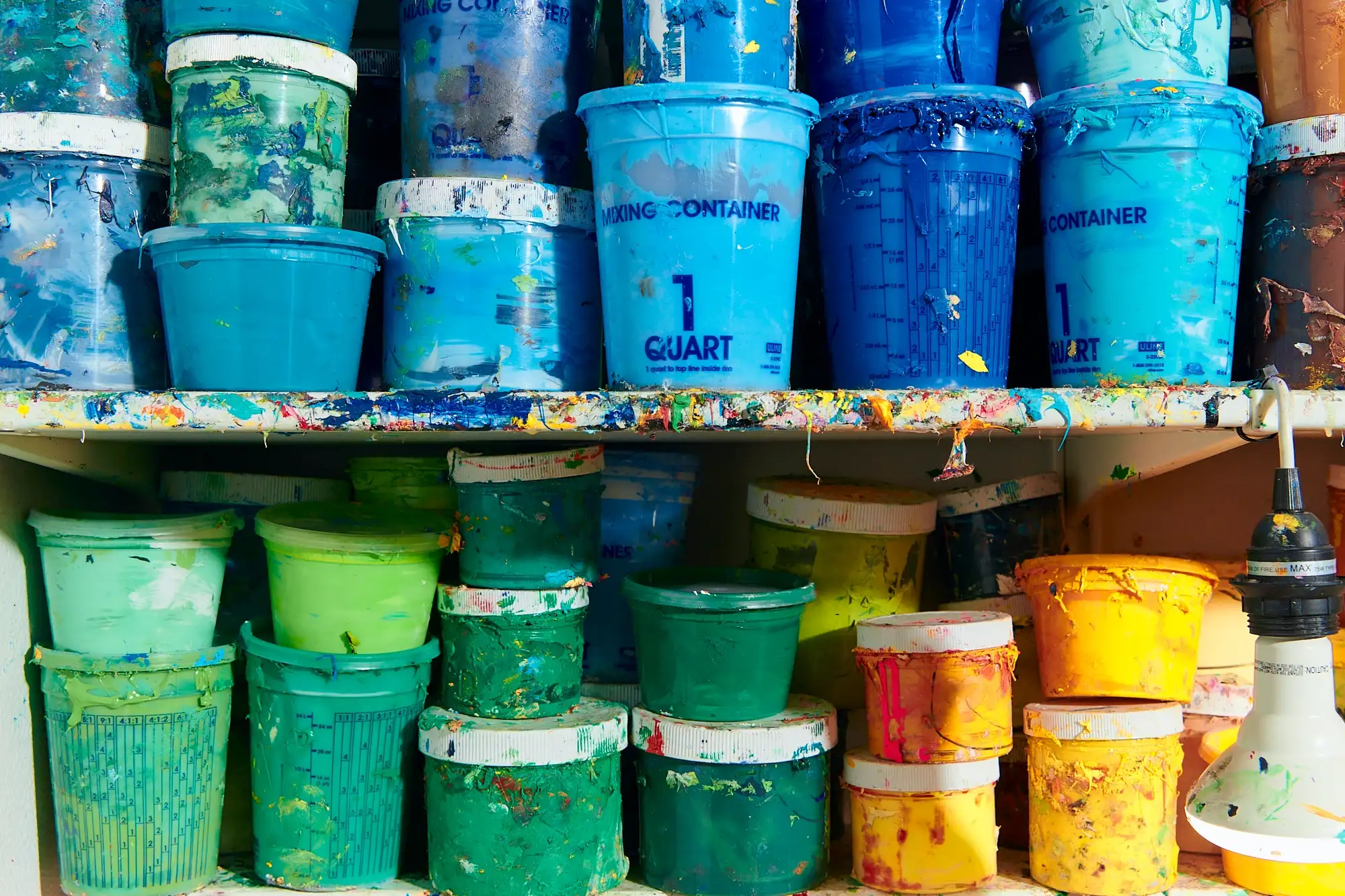
It All Starts With Good Ink
In our studio, we only use high-solids, Japanese, water-based inks because they are simply the best on the market.
Water-based inks lay down thinner ink deposits with superior edge definition, so small lettering, fine lines, and halftones stay crisp.
These inks produce superior results compared to plastisol inks, and we have 15+ years of running them on presses to prove it.
How Water-Based Inks Work
Water-based inks cure in two moves: first, the water flashes off with heat and airflow; then the acrylic binder sets at temperature to fully cure to the garment.
Plastisol inks cure by fusing resin at temperature and doesn’t require evaporation, so they usually leave a thick film sitting on the shirt.
Water-based ink needs a steady rhythm or it’ll dry in the screen. Luckily, we’ve been running these “difficult” inks for over 15 years, so we’ve got the tricks, the timing, and the touch to keep them flowing smoothly without over-depositing.
How Do Water-Based Inks Feel On Apparel?
Soft, natural, and comfortable from day one.
On light garments, the prints are very thin, detailed, and fabric‑forward.
On dark garments, we’ll drop in a lean white underbase so colors pop, but still keep the print light, flexible, and soft, only getting better after a couple washes.
Either way, the print feels like a part of the apparel, not like a shiny sticker on top.
Look Good, Feel Good
Water-based inks deliver sharper edges for crisp type and fine details that make them perfect for design-focused projects.
Whether you're printing a bold logo on a white custom t-shirt or putting an intricate design on a dark tote bag, water based inks ensure the details come through without looking like a sticker on top of the fabric.
If you’re looking for a natural, matte look that reads as part of the fabric, then water-based inks are the way to go.
What Water-Based Inks Are Made Of?
At the core, it’s an acrylic binder in water plus pigments for color.
Just as crucial, is what it doesn’t have. The 301 series we use is free from PVC, plastisol, phthalates, and formaldehyde.
Sometimes we use additives when the fabric or conditions call for them. We keep a small suite of purpose-made modifiers in stock to adjust for flow, open time, and hand. But, we keep it minimal, so the color, coverage, and durability is still solid.
For quality control, every run gets heat checks on press and wash-tests before it ever leaves the shop. This is baked into our process so reorders match the first print every time.
Let’s Make Something Worth Wearing
We’re not down with greenwashing, but the facts are the facts. These inks avoid a lot of the bad stuff. No PVC. No chlorine chemistry. No phthalate plasticizers. Low VOCs. Plus, our shop filtration keeps pigment solids out of the drain.
Water-based is better for your shirt, far better for our crew, and way easier on the planet.
We know we’re makers who put more things into the world. We want all of those things to look good, feel good, be good, and last.
Ready to see water-based inks in action? Let’s get your design on something people will keep in rotation.


